
Practical guide
Day Trips from Asunción
Some of Paraguay's best-known crafts, a lake, a pilgrimage town and a baroque church all sit within a couple of hours of the city. Most towns on this page sit along two roads out of Asunción: Ruta PY02 heading east into Cordillera, and Ruta PY01 heading south to Yaguarón. Each has one clear reason to go, from ceramics in Areguá to lace in Itauguá. Several of them sit on the Circuito de Oro, the loop through Central, Cordillera and Paraguarí that SENATUR, the national tourism office, promotes. You can reach most of them by ride app, and many by bus from the city's bus station. The Jesuit Missions near Encarnación close the list as an overnight trip. Many of these towns hold fairs and festivals, so check Around Town for dates before you pick a day.
Quick comparison
Drive times are our own road estimates from Plaza de los Héroes downtown, without traffic. Add time at rush hour and on long weekends, and check a ride app before you leave. Hours and prices are in the box above.
| Town | Known for | By car from downtown | Bus | Good to know |
|---|---|---|---|---|
| Luque | Filigree jewellery, Museo CONMEBOL | About 17 km, 20 to 35 min | City line 203 passes through | Book the museum visit online |
| Capiatá | Museo Mitológico Ramón Elías | About 23 km, 30 to 50 min | Ruta PY02 buses from the station | Visits are guided |
| Areguá | Ceramics, Cerro Kõi, lake views | About 29 km, 40 to 60 min | City lines 11, 203 and 110 | Strawberry fair in winter |
| Itauguá | Ñandutí lace | About 34 km, 45 to 70 min | Ruta PY02 buses from the station | Most lace shops line Ruta PY02 |
| San Bernardino | Lago Ypacaraí, craft fair, treetop park | About 49 km, 65 to 90 min | Not in the station timetable, check before going | Saturday market; no swimming |
| Yaguarón | Guaraní baroque church, Dr. Francia museum | About 55 km, 65 to 90 min | Line 245 from the station | Church open only on announced days |
| Caacupé | Basílica and museum | About 61 km, 70 to 100 min | Ruta PY02 buses from the station | Avoid 28 November to 8 December |
| Altos | Luis Alberto del Paraná museum | About 50 km, 70 to 100 min | Not in the station timetable, check before going | Pair with San Bernardino |
| Tobatí | Clay pottery and wood carving | About 73 km, 80 to 110 min | Line 119 via Caacupé | 2026 Expo Kambuchi ended 27 September |
| Piribebuy | 1869 battle history museum | About 78 km, 85 to 120 min | Line 197 via Caacupé | Museum hours are short, see the box |
| Jesuit Missions | UNESCO World Heritage ruins | About 390 km, 6 hours or more | Long-distance buses to Encarnación | Overnight only |
Areguá: ceramics, Cerro Kõi and the lake
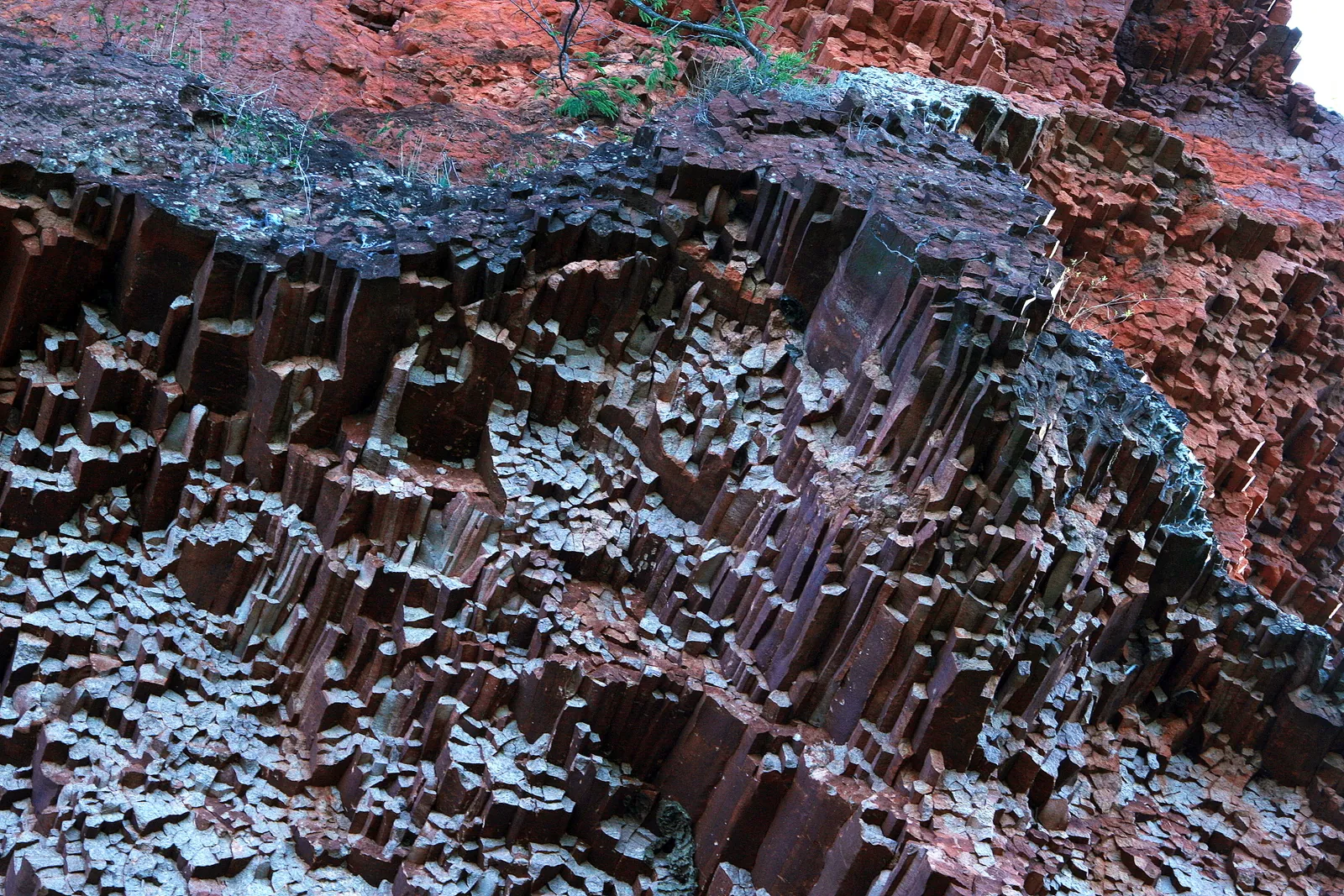
Areguá is the classic short trip: a lakeside town known for ceramics and strawberries, and an easy afternoon from the city. At CEPROCA, the ceramics production centre run by its member potters, you can watch pieces being thrown on the wheel and modelled by hand, then browse the permanent craft fair in an old house with a shaded patio. Cerro Kõi, a protected natural monument, has hexagonal sandstone columns. The environment ministry notes that similar formations are known in only two other places, Canada and South Africa. On the lakeshore at Estanzuela, a café lets you paint your own ceramic piece.
The 2026 Expo Frutilla strawberry fair, with more than 80 producer families on the main avenue from July to September, ended on 30 September 2026. For the full plan, bus lines and a suggested afternoon, see our Areguá guide. Map
San Bernardino and Lago Ypacaraí
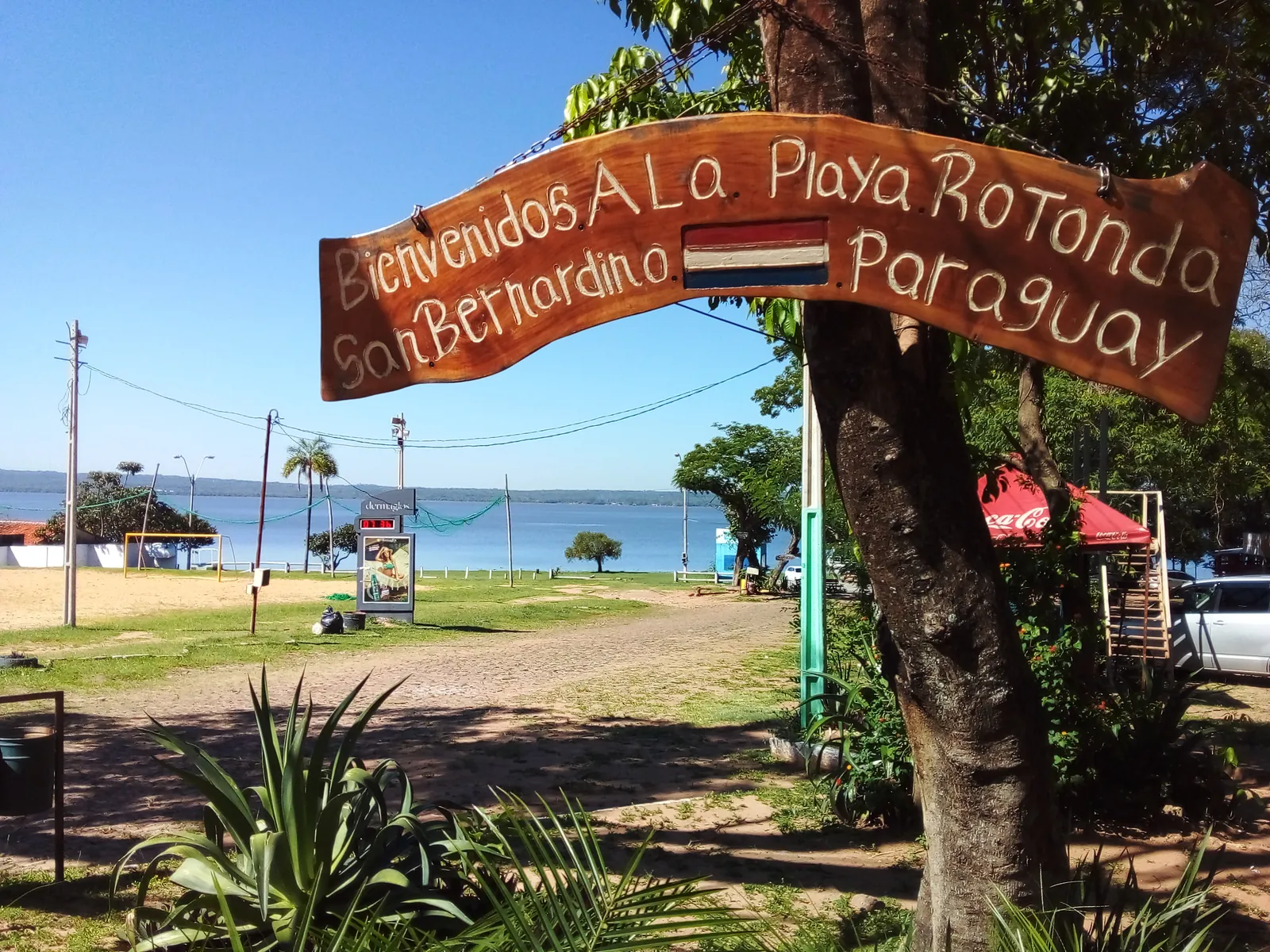
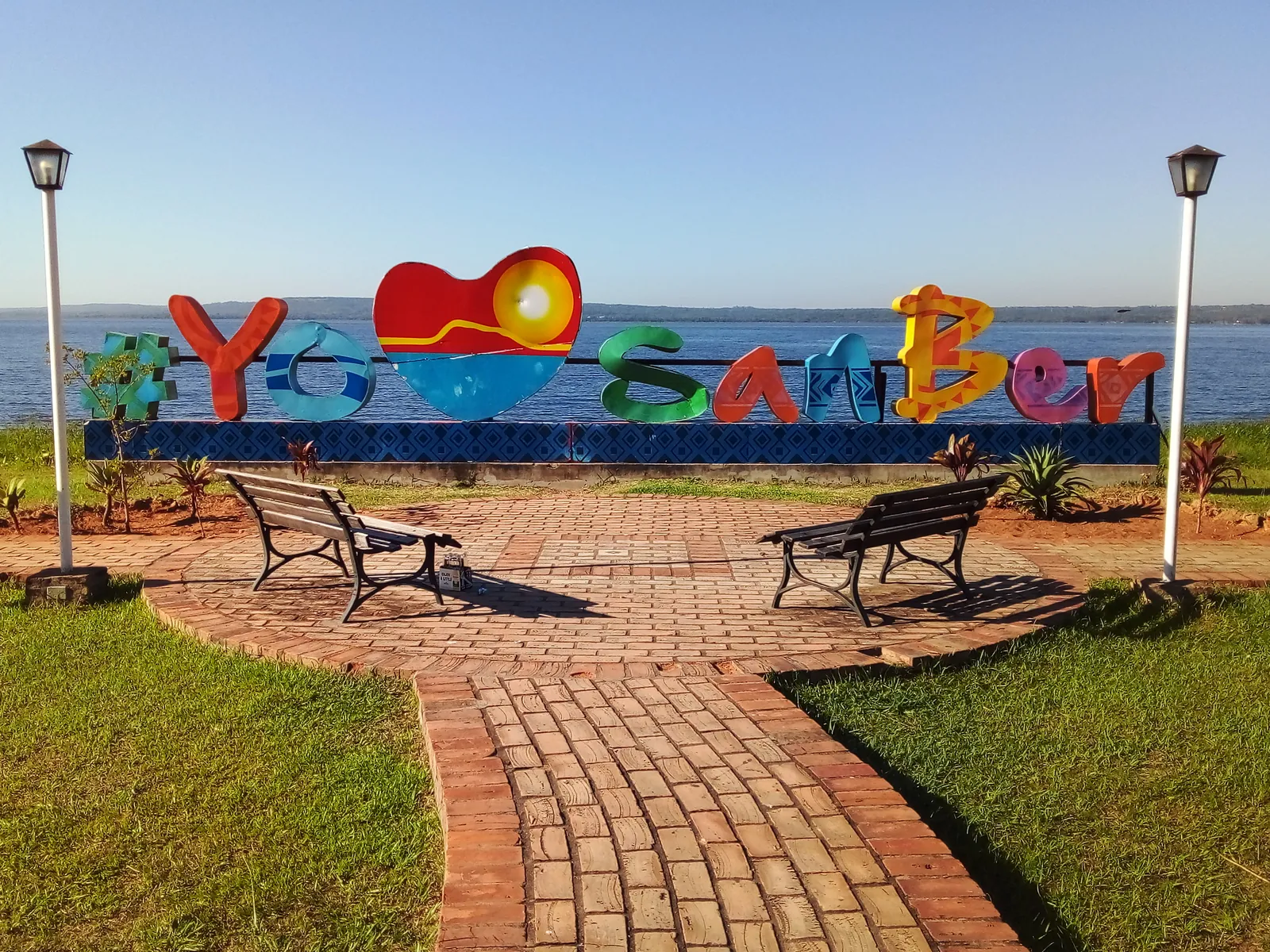
San Bernardino, or San Ber, is the summer town on the eastern shore of Lago Ypacaraí, and it also draws visitors in winter. Most of the action is around Playa La Rotonda. The craft fair there sells jewellery, hats with ñandutí details, bombillas, guampas and thermoses, with food stalls and a view of the lake. Catamaran rides of about half an hour run along the shore, even in winter. Aventura Xtrema, near the same beach, has treetop circuits and ziplines for different ages, with guides and safety gear.
On Saturdays, a market in Plaza Bernardino Caballero brings together farmers, antique sellers and small producers of sausages, cheese, bread and coffee.
About swimming: in December 2025 the environment ministry (MADES) said the waters of Lago Ypacaraí are not fit for bathing, because of high levels of faecal coliforms. The beach and lakeside are fine for a walk. Map
Itauguá: the home of ñandutí
Itauguá is the town of ñandutí, the fine spiderweb lace that turns up on tablecloths, clothes and even shoes. The best first stop is the Coordinadora de Artesanos de Ñandutí, in the municipal cultural centre on Ruta PY02. An artisan explains the different patterns there, and in the afternoon one of them, Liliana Alfonso, can even teach you to weave. The Museo Comunitario del Ñandutí, on General Caballero, covers the history of the lace. Most shops selling it line Ruta PY02.
In the centre, the Rosario parish church dates from between 1896 and 1908, and old houses around it now hold shops. The Festival Nacional del Ñandutí, first held in July 1970, held its 46th edition, with free entry, in 2025. Map
Luque: filigree and the CONMEBOL museum
Luque is the home of Paraguayan filigree, the fine gold and silver wirework that arrived with the Spanish. The Instituto Paraguayo de Artesanía runs a filigree workshop at its Luque office, where you can watch pieces being made, see new makers being trained and buy pieces typical of the town. Paraguay is one of the few countries where filigree is still made. (unknown) Map
Football fans can add the Museo CONMEBOL, the South American football confederation's museum, renewed in 2024. Visits are booked through its website. Map
Capiatá: the Museo Mitológico Ramón Elías
At kilometre 21 in Capiatá, the Museo Mitológico Ramón Elías fills an old house built with period bricks, roof tiles and stone, with a veranda running all the way around it (corredor jere). The founder travelled the country collecting objects. One room is given to Paraguayan mythology. Another shows cannonballs and weapons from the two great wars, and a third covers the Franciscan, Jesuit and Guaraní era. Every visit is guided. (unknown) Map
Caacupé: the Basílica and its museum
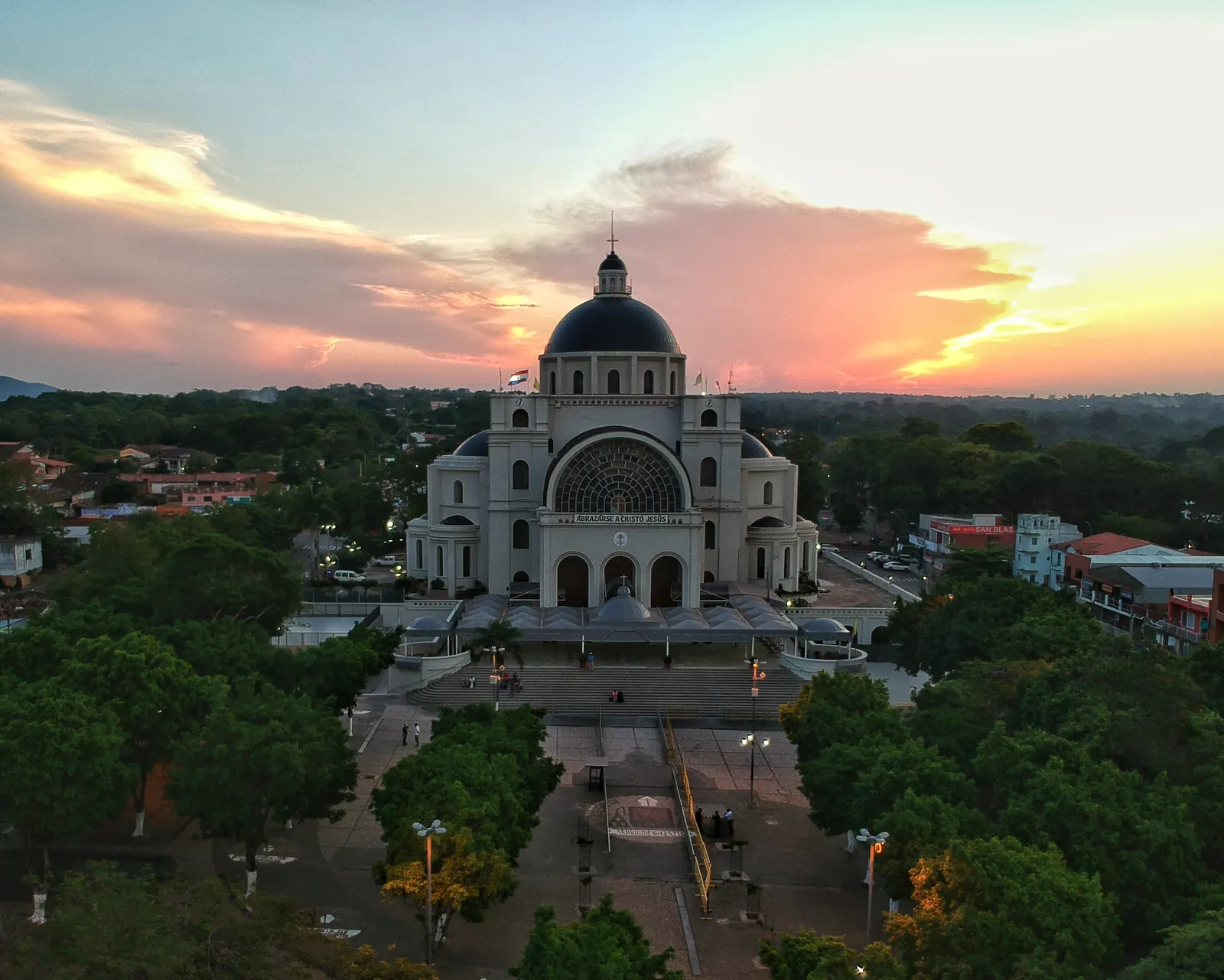
Caacupé is known as the spiritual capital of Paraguay, and its Basílica of the Virgen de los Milagros draws pilgrims and visitors. Below the sanctuary, behind the San Roque González de Santa Cruz chapel, the Basílica museum covers more than 400 years of history and religious art. Look for old photographs and remains of the earlier church built in 1846, under Carlos Antonio López, along with records of the papal visits of 1988 and 2015. Guides tell the story of the Virgin and the churches built for her.
When to avoid it: the festival of the Virgen de Caacupé runs from the novena on 28 November to 8 December, the main day, and thousands of pilgrims arrive, many on foot. Go at another time for a quiet visit. For something outdoors, El Escondido, a 32-hectare park at kilometre 55 of Ruta PY02, has trails and a 603-metre zipline. Map
Yaguarón: Guaraní baroque under restoration
The Templo San Buenaventura in Yaguarón was built between the 17th and 18th centuries. It is on UNESCO's Tentative List for World Heritage and is one of the main examples of Guaraní baroque. It is now under a full restoration by the Secretaría Nacional de Cultura's Tekorenda programme, and a new phase announced in July 2026 continues work on the sacristy. The church opens only on announced days: a morning open day on 18 April 2026, and guided tours of the works for groups of 15 on 5 June 2026, with closed shoes required. Plan this trip around the next announced visit day (unknown), and check Around Town.
Any week, you can visit the Museo Dr. Gaspar Rodríguez de Francia, 200 metres from the church. It was the home of Captain José Engracia de Francia, father of Dr. José Gaspar Rodríguez de Francia, and dates from the second half of the 18th century. Inside are portraits of key figures in Paraguayan history, including Fulgencio Yegros, Pedro Juan Caballero and Dr. Francia himself. Map
Going further in Cordillera: Altos, Piribebuy and Tobatí
Altos has a museum honouring Luis Alberto del Paraná, born Luis Osmer Meza in Altos in 1926, who took Paraguayan music around the world. It shows photographs, personal objects and material from his career. Map
Piribebuy is known for the Battle of Piribebuy, fought on 12 August 1869. The Museo Histórico Comandante Pedro Pablo Caballero, on Mariscal Estigarribia in the centre, was founded in 1969 by veterans of the Chaco War. It holds cannonballs, weapons and maps from the War of the Triple Alliance, Chaco War uniforms, and the 60-stripe poncho para'i worn by the singer Agustín Barboza. A poncho interpretation centre, where artisans teach weaving for free, was due to open in April 2026, so check before going. Map
Tobatí is a town of ñai'ũ clay pottery, wood carving and karanday palm work. Its Expo Kambuchi brings the makers together: the sixth edition, 25 to 27 September 2026, had 40 artisans at Finca Aguayo in the 21 de Julio area. By car, take Ruta PY02 to Caacupé and turn off towards Tobatí. (unknown) Map
Worth an overnight: the Jesuit Missions of Itapúa
The Jesuit-Guaraní missions of Santísima Trinidad del Paraná and Jesús de Tavarangue were added to UNESCO's World Heritage List in 1993. Trinidad, about 35 km from Encarnación, is the largest and best preserved, with a stone museum in the old sacristy. San Cosme y Damián, founded in 1632, still has a working church. One ticket covers all three sites for 72 hours. The sites also hold evening visits (night shows use projected light effects). At about 390 km by road, this is an overnight trip, not a day out. For the overnight plan, see our Jesuit Missions guide. Map
Getting there
There are three ways out: intercity buses, a ride app, or a private driver or tour.
Leaving Asunción: the bus station
Buses to towns east and south of Asunción leave from the Estación de Buses de Asunción (EBA), the city-run bus station formerly called the Terminal de Ómnibus de Asunción (TOA). It stands where Avenida Fernando de la Mora meets Avenida República Argentina, and has worked from this site since 1984. Map
- Short trips: according to the station's timetable, short-distance buses board on the lower level (subsuelo), and you pay the driver in cash. Long-distance companies sell tickets at numbered counters.
- Day trips from here: frequent buses to Yaguarón, and many buses to Tobatí and Piribebuy whose routes pass through Capiatá, Itauguá and Caacupé. For the Missions, long-distance companies run to Encarnación.
- San Bernardino is not in the station's published timetable, so check before going. (unknown)
- Areguá does not need the station: city lines run there, see our Areguá guide.
- Getting there: by ride app (booking a ride) or city bus (how bus cards work). (unknown)
By ride app
A ride app is the simplest way to reach places not listed in the station's timetable, such as San Bernardino and Altos. For the far towns, check that you can book a ride back before you set out (unknown). See booking a ride.
Private drivers and tours
Private drivers and tour agencies also sell full-day loops through these towns. We have not reviewed any, so compare what each includes.
FAQ
What is the easiest day trip without a car?
Areguá. City buses run there from Asunción, and the town is compact enough to explore on foot. Yaguarón is also simple, with frequent buses from the bus station.
Can you swim in Lago Ypacaraí?
No. The environment ministry said in December 2025 that the lake is not fit for bathing. Walk the shore or take a catamaran ride instead.
Is there a bus from the bus station to San Bernardino?
San Bernardino does not appear in the station's published timetable, so check before going, or take a ride app.
Want company? See what's on this week in Around Town, or join a plan on Meetups.