
Villa Morra: A Neighborhood Guide
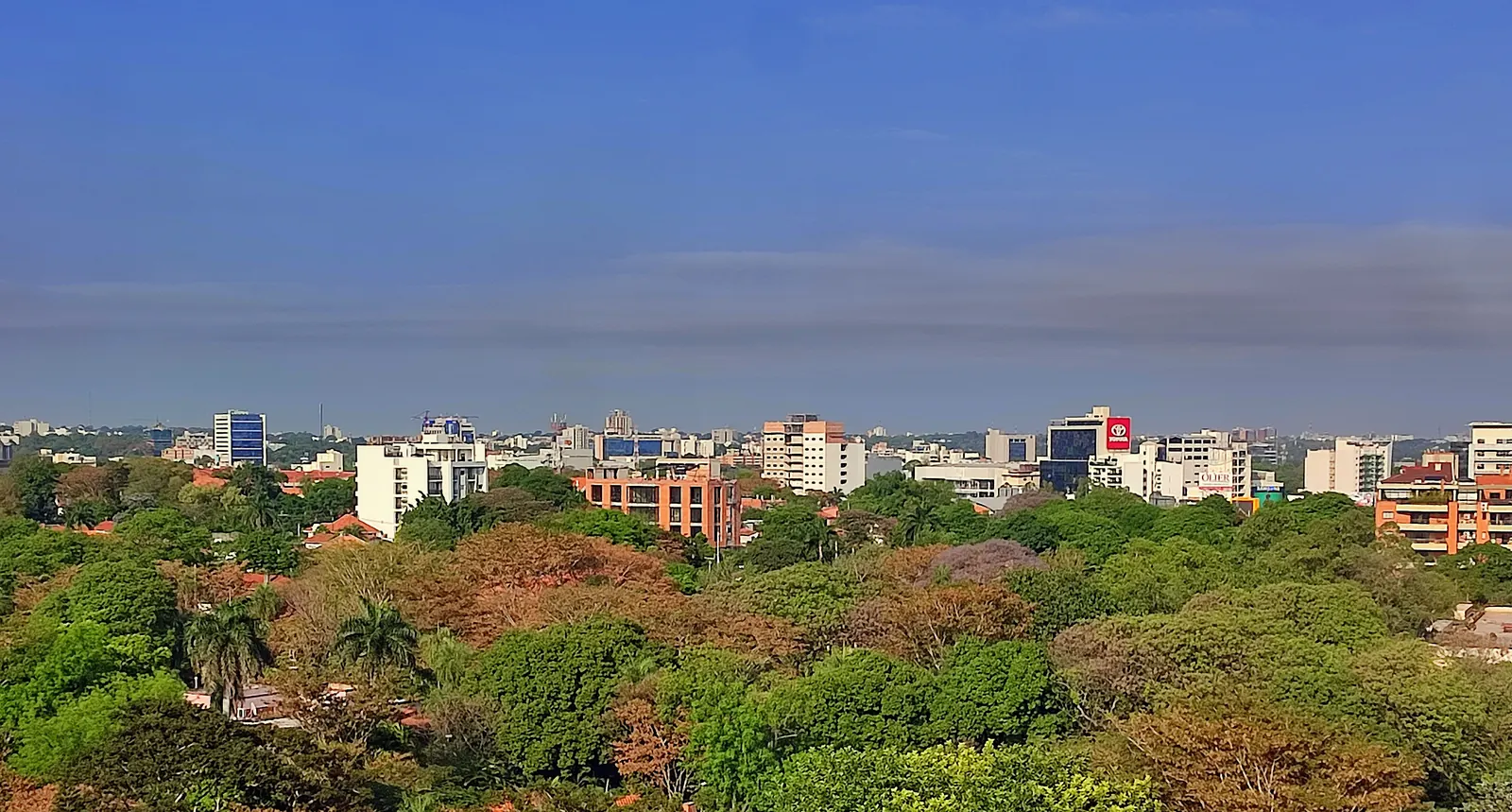
Villa Morra is one of Asunción's 68 official barrios, on the east side of the city, and its name is also used more loosely for the busy area of avenues, offices, shops and restaurants around it. That is why many Open Asu pages give travel times "from the Ycuá Satí / Villa Morra side of town": it is a familiar reference point for anyone who lives in or visits Asunción. This guide covers where the barrio is, a little of its history, where to eat, have coffee and spend an evening, what is nearby and how to get around.
Where Villa Morra is
Officially, Villa Morra is a barrio in the district of La Recoleta, the municipal zone that also takes in barrios such as Recoleta, Ycuá Satí, Los Laureles and Mariscal Estigarribia, according to the Supreme Court's 2020 ruling on local court boundaries, which follows the city's district ordinance. Map
In everyday use the name covers more ground. When a map of the 68 barrios went viral in 2023, ABC Color reported on places that people commonly put in the wrong barrio: the Shopping Villa Morra, for example, is in barrio Recoleta, while the Recoleta local court is in barrio Villa Morra. Ycuá Satí, often named together with Villa Morra, is a separate barrio in the same district.
Some streets help you find your way. Avenida Mariscal López, one of the city's main avenues, was once called calle Morra. The street named Dr. Morra runs north to south from Avenida España to Avenida Mariscal López, two blocks west of Avenida San Martín, according to the city's street history.
A short history
The barrio takes its name from Francisco Morra, an Italian surgeon who arrived in Asunción in 1869 as an army doctor during the War of the Triple Alliance and stayed on to work as a doctor, according to the Municipalidad de Asunción. He also owned the city's tram company. On 6 February 1888 he founded "Villa Morra" on 147 blocks near La Recoleta, on land that ran from calle Manorá (today General Genes) to Cerro Corá, and from Sacramento to Laureles, today Avenida San Martín.
The early villa was a place of country houses and leisure. Morra dammed the Mburicaó stream to build swimming pools, and the pools on Mariscal López, known as "Los Baños", are described by the city as Asunción's first tourist venture. Around 1890 he brought about 30 families from Italy. The streets were first named after trades and features, and the city says only one keeps its original name: De Las Palmeras.
A 2019 La Nación review of a book on the barrio describes how Villa Morra shifted the city's growth toward the east, and how its old residences have given way over the decades to a commercial district.
What the barrio is like
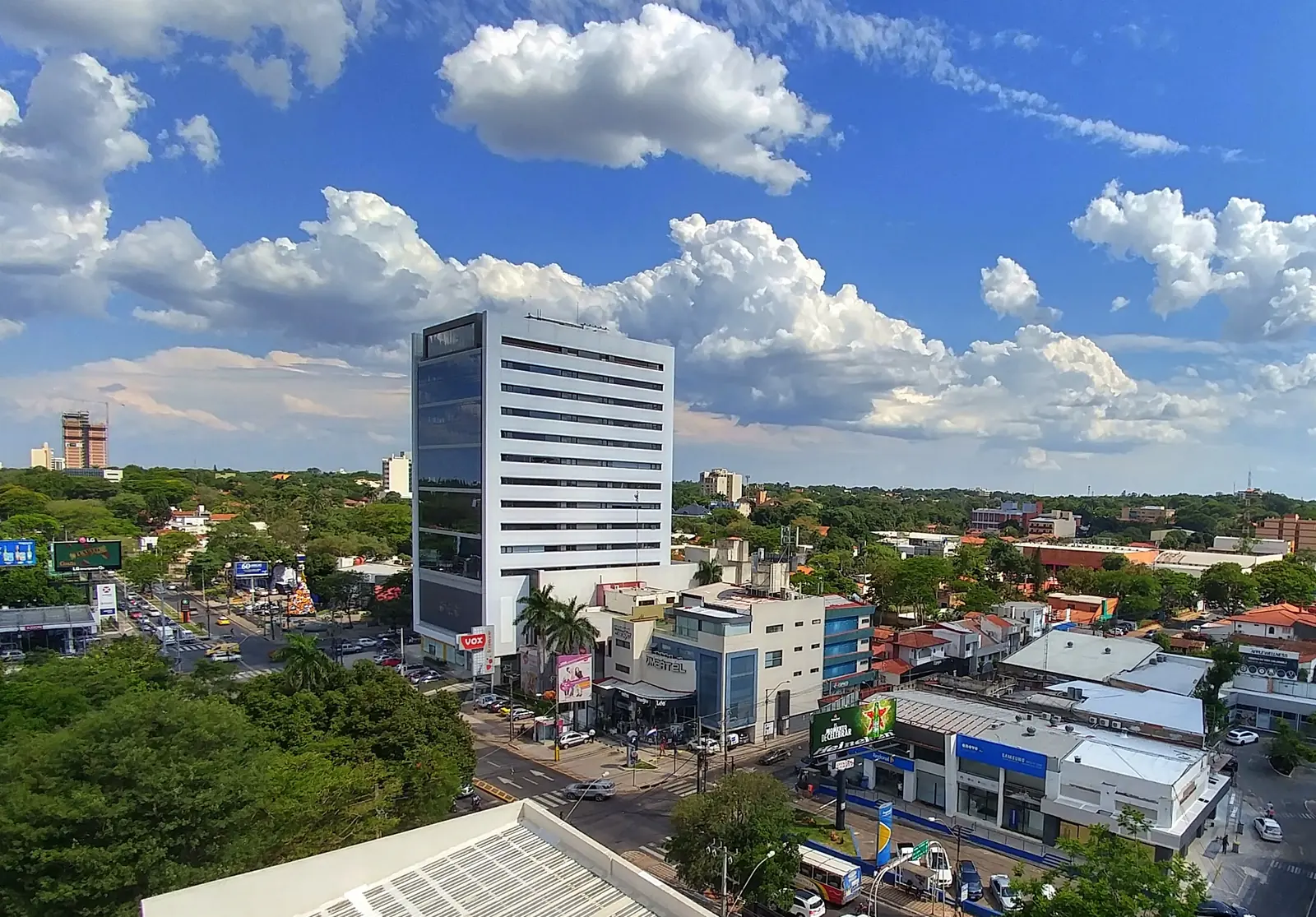
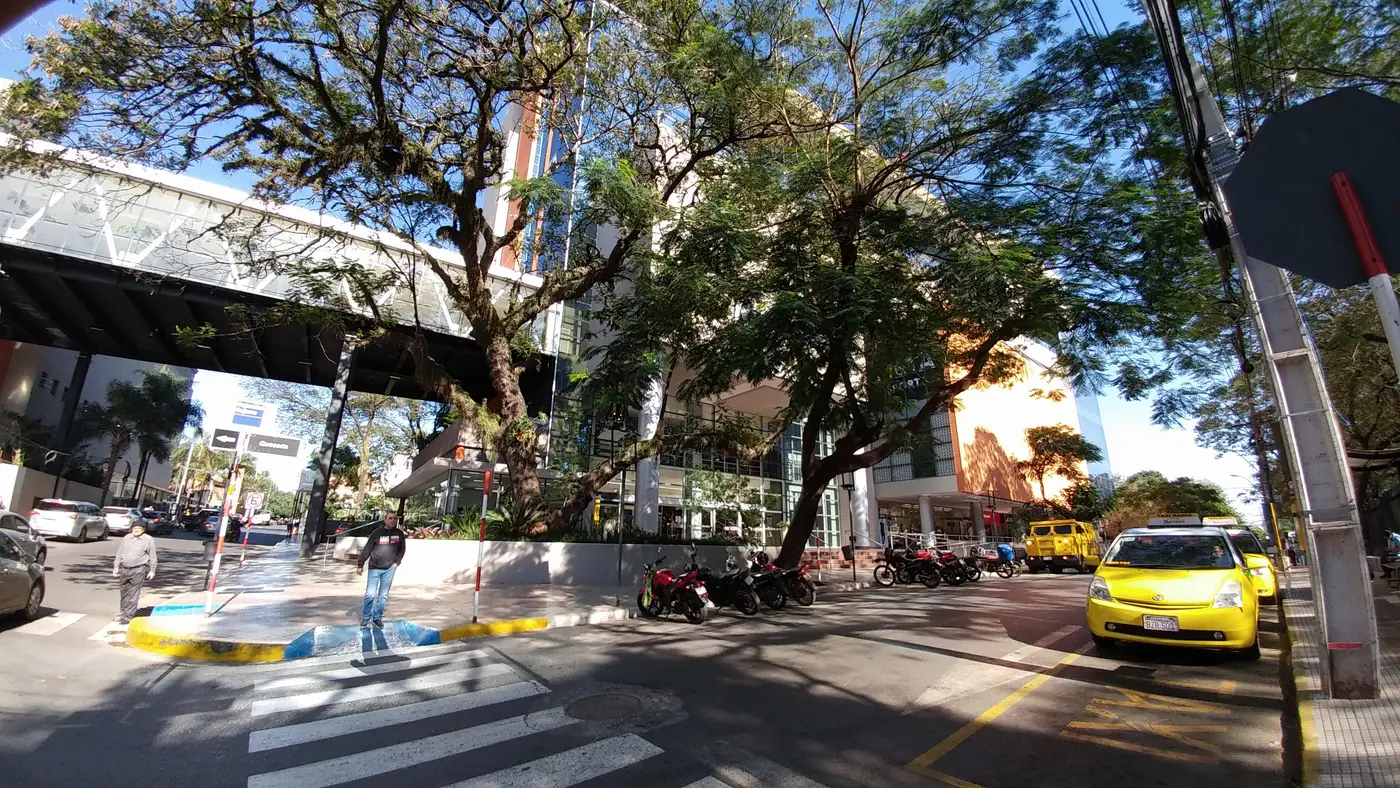
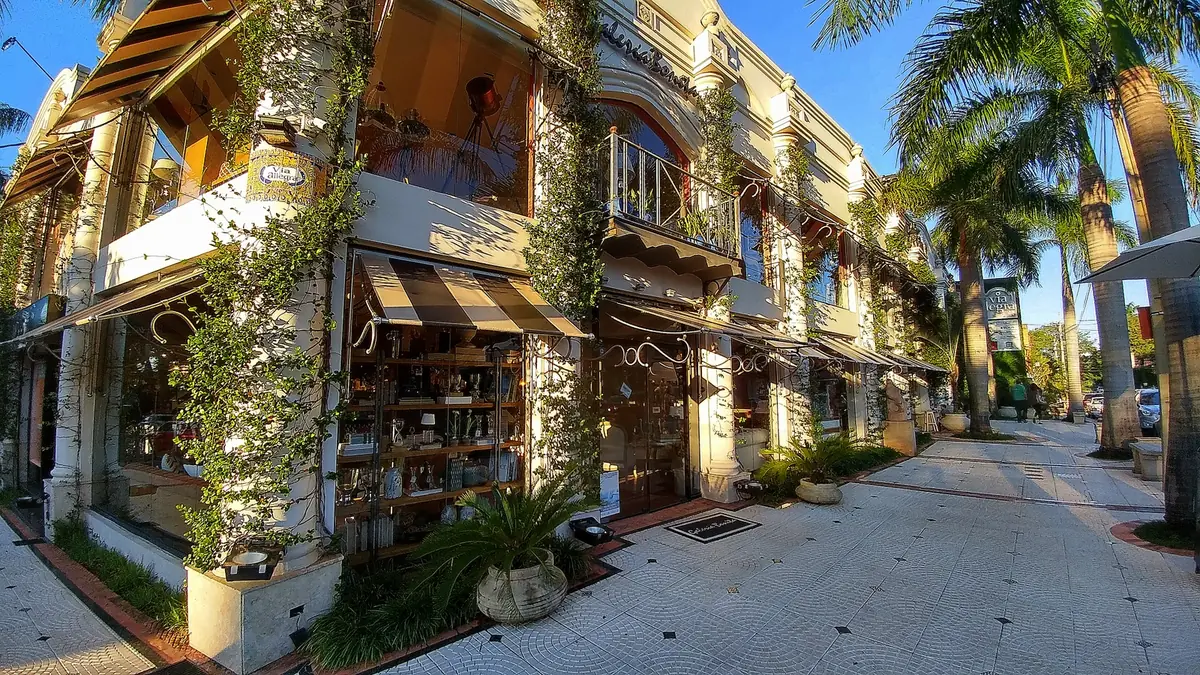
Today Villa Morra mixes residential streets with busy avenues, offices and shopping centers. A 2026 InfoNegocios profile of a local restaurant describes it as a corporate area, with lunchtime menus aimed at office workers. There are hotels on the main avenues, including Avenida Mariscal López.
Eat
Recent news coverage mentions several places to eat in the area. Two examples:
- D'Alepo Cocina de Origen serves Arabic and wider Middle Eastern dishes, with a monthly Arabic buffet and themed dinners, and more traditional Paraguayan dishes such as vorí vorí at lunch (InfoNegocios, April 2026).
- Malandra Café & Copas, at Olegario Víctor Andrade 1176, opened in early 2026 as a specialty coffee spot with breakfasts and sandwiches, adding sourdough pizzas and drinks in the evening (InfoNegocios, February 2026).
These are listed for orientation, not as recommendations. Check that each is open before you go.
Cafés
Karu has its main café on Dr. Guillermo Enciso Velloso, in barrio Ycuá Satí, and a second branch in Las Mercedes; both appear on its own website. Malandra, above, is also a café by day. Opening hours are in the box at the top of this page.
Evenings
La Tarantella, a Paraguayan restaurant chain, reopened its rooftop "in the heart of Villa Morra" on 1 September 2026, with food and cocktails (trece.com.py). Malandra serves drinks in the evening too.
For more bars, including the Carmelitas area, Las Mercedes and the old center, see our bars in Asunción guide. Carmelitas, a popular name for the streets around the Paseo Carmelitas complex, does not appear among the city's 68 official barrios.
Nearby
- Museo del Barro: a 5 to 10 minute walk from Ycuá Satí. See our museums guide and the Museo del Barro entry.
- Cementerio de la Recoleta: about 8 to 15 minutes by ride app. See our note on the Recoleta cemetery.
- Parque Ñu Guasu: about 8 to 15 minutes by ride app. See our note on Ñu Guasu.
Travel times are estimates from the Ycuá Satí / Villa Morra side, and traffic changes them.
Staying in the area and getting around
Villa Morra can work as a base if you want restaurants, cafés and shops within reach, and there are hotels in the area. From here the old center is roughly 15 to 30 minutes by ride app, depending on traffic, as our getting-around notes explain.
- Ride apps: the simplest option at night. See booking a ride.
- Buses: check Moovit for lines and the nearest stop, and see how bus cards work.
FAQ
Where is Villa Morra in Asunción?
On the east side of the city, in the district of La Recoleta, the same district as the barrios of Recoleta and Ycuá Satí. The name is often used for the wider area around it.
Where can I eat in Villa Morra?
The area has restaurants for lunch and dinner, from Middle Eastern cooking to cafés with evening menus. See the Eat section for recent examples, and check that each is open.
Are there bars in Villa Morra?
Yes, including a restaurant rooftop with cocktails that reopened in September 2026 and a café that serves drinks in the evening. For more, see our bars in Asunción guide.
Is Villa Morra a good area to stay in?
It is practical: hotels, restaurants and cafés are close together, the Museo del Barro is within walking distance of Ycuá Satí, and ride apps reach the old center in roughly 15 to 30 minutes.
Why is it called Villa Morra?
After Francisco Morra, the Italian doctor who founded the "villa" in 1888.
Meet people in the neighborhood: see Meetups.