
Hospitals in Asunción: Where to Go and Who to Call
Medical emergency? Call 141 from a landline or 021 141 from a mobile. Free ambulance, any hour. Everything else is below: which hospitals take walk-in emergencies, how public, IPS and private care differ, and what to bring.
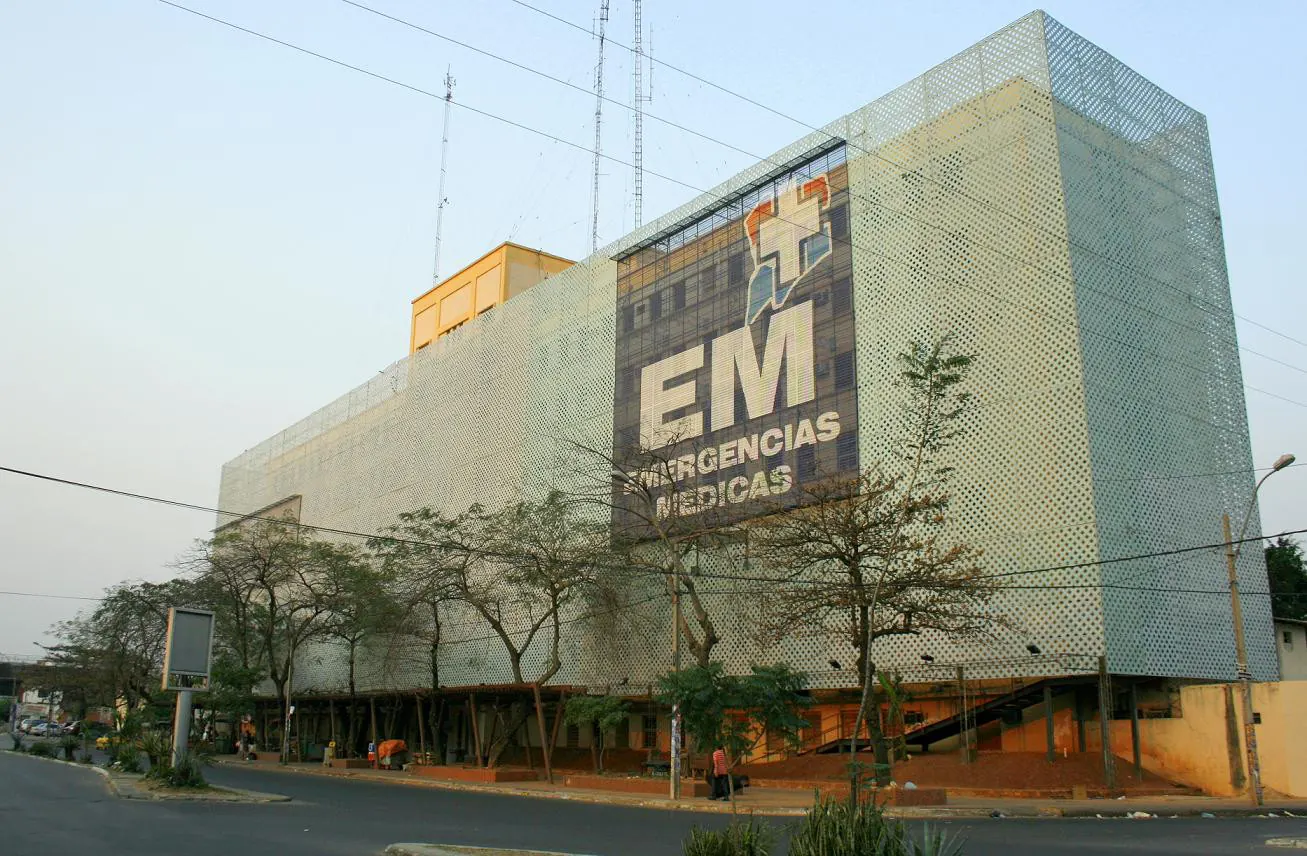
Public, IPS or private: which one?
Asunción runs three hospital systems, and the right one depends on your coverage.
- Public hospitals: the Ministry of Health runs them, and they treat everyone, foreigners included. Expect long waits.
- IPS: Paraguay's social security system runs its own hospitals for registered workers and their families. Not registered? Skip it.
- Private hospitals (sanatorios): you pay at the desk or bill your insurer, and you wait less. Most visitors and foreign residents with insurance go here.
Every emergency department ranks patients by urgency, not arrival time. Bring a phone charger: a sprained ankle can wait hours behind a car crash.
Private hospitals with emergency rooms
Tap a name for the hospital's website, or an address for directions.
| Hospital | Address | Emergencies |
|---|---|---|
| Centro Médico Bautista | República Argentina and Campos Cervera | 24 hours |
| Centro Médico La Costa | Avenida Artigas 1500 | 24 hours, with on-call pediatrics, gynecology, internal medicine and surgery |
| Sanatorio Migone | Find on Google Maps | 24 hours, including pediatric, gynecological and cardiology |
| Sanatorio San Martín | República Argentina and Encarnación | 24 hours |
| Sanatorio Adventista | Pettirossi 380 | 24 hours |
| Sanatorio Británico | Avenida Rodríguez de Francia 910 | Pediatric emergencies, 24 hours |
| Hospital Universitario (Universidad Católica) | Lillo and Emeterio Miranda | Urgent care |
Call ahead if you can. Most private hospitals ask for a deposit or your insurance card at the desk.
Public hospitals
- Hospital de Trauma "Manuel Giagni", Avenida General Santos and Teodoro S. Mongelós. The city's main public emergency hospital treats trauma and emergencies around the clock. Call 021 204 800.
- Hospital General de Barrio Obrero. Call 021 370 099.
- Hospital Barrio San Pablo. Call 021 500 078.
- Instituto Nacional de Cardiología, Avenida Itapúa. Call 021 292 532.
- Specialist institutes on Avenida Venezuela: tropical medicine (IMT), respiratory disease (INERAM) and the psychiatric hospital.
The Hospital de Clínicas, the national university's teaching hospital, runs an adult emergency service. It's in San Lorenzo, in Greater Asunción, not the city itself.

IPS (social security)
IPS covers workers who pay into it and the family members they register: your spouse or partner, minor children and parents. Its main hospital, the IPS Hospital Central, treats adult emergencies 24 hours a day. The main entrance is on Avenida Santísimo Sacramento near Dr. Manuel Peña. Not on IPS? Go public or private instead.
What to bring
- Your passport or cédula.
- Your insurance card, if you have one.
- A list of medicines you take, plus any allergies and conditions.
- Recent test results, if they're relevant.
- A charged phone and someone's number to call.
Language
Expect Spanish. None of these hospitals lists English-language care on its website. Write a short note in Spanish with your symptoms, medicines and allergies, and keep it on your phone. Better still, bring a Spanish-speaking friend. No friend handy yet? Ask in the Open Asu WhatsApp group for someone who can come with you or translate by phone.
Not an emergency, but you need to get there? Book a ride on Bolt, Uber or MUV. See getting around Asunción. For medicines, see our pharmacies guide.
FAQ
What number do I call for an ambulance in Paraguay?
141 from a landline or 021 141 from a mobile. It's free and runs 24 hours. You can also dial 911.
Which hospitals in Asunción have a 24-hour emergency room?
The public Hospital de Trauma, plus private hospitals including Centro Médico Bautista, Centro Médico La Costa, Sanatorio Migone, Sanatorio San Martín and Sanatorio Adventista.
Can foreigners use public hospitals in Paraguay?
Yes. Public hospitals treat everyone. Expect waits and Spanish-only staff.
What is IPS?
Paraguay's social security institute. Its hospitals are for registered workers and their families only.
Do I need an appointment for a private emergency room?
No. Walk in, and staff will see you in order of urgency. For non-urgent problems, book a regular appointment instead.
Not medical advice. Updated October 2026.